

By Daisy, founder of Leopard Paw Safaris and a former safari guide.
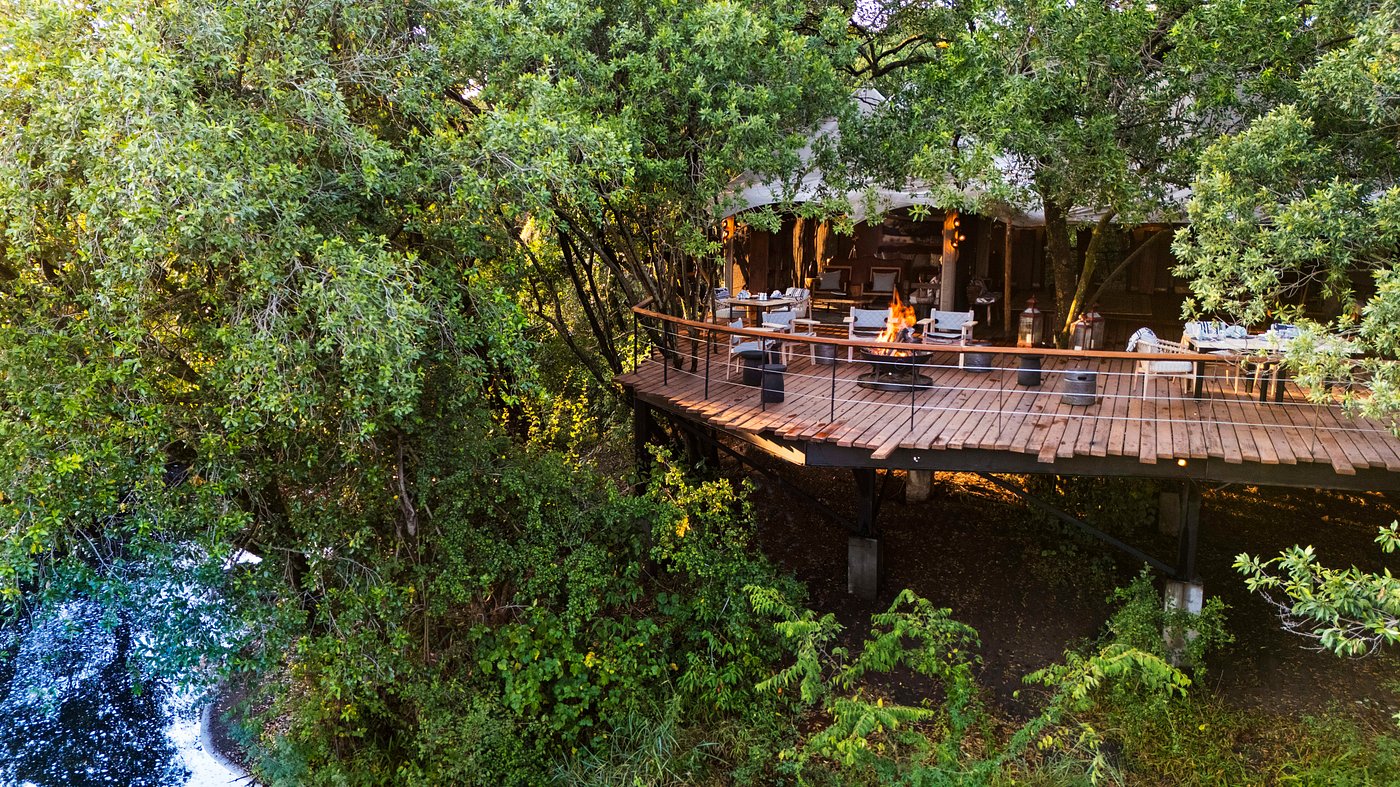
A treehouse safari in Kenya can mean very different things. Almost any camp with a raised deck now calls itself a treehouse, but the real options are varied: a 1930s lodge where a princess went to sleep and woke up a queen, a canopy tent in the far north with elephants moving on the forest floor beneath you, and an open sleep-out deck with nothing between you and the stars. They are not the same experience, and they do not suit the same traveller. This guide explains what counts as a treehouse, the main types in Kenya, and who each one is for.
What counts as a treehouse safari in Kenya
The marketing muddies this, so it helps to clear it up first. Kenya sells three different things under one word. A true treehouse is accommodation built into or on platforms among the trees, with the forest or bush beneath you. A raised or stilted tent gives a treehouse feel but is not really up in the canopy. Some excellent camps are described this way, but it is a different experience. A sleep-out is an open deck or platform, often one night away from your main camp, where the point is sleeping under the open sky and not the structure itself.
None is better than the others, but knowing which one you are booking saves disappointment. Below, I have split Kenya’s options by what they actually deliver.
The luxury forest treehouse: Sarara Treehouses
Sarara Treehouses sits in a forest glade in the vast Namunyak Conservancy, in the Mathews Range of northern Kenya. A handful of beautifully done canopy tents stand on platforms, with wildlife moving freely on the forest floor below and birds flitting past at eye level. The camp is off-grid and solar-powered. It is owned and run by the local Samburu community, so your stay funds the conservancy and its people. The setting straddles two worlds, montane forest above and arid northern plains below, with elephants, reticulated giraffe and Grevy’s zebra around, plus cultural experiences like the Singing Wells.

It suits couples and families who want immersion, culture and wilderness over five-star gloss, and who love the idea of a forest literally beneath their bed.
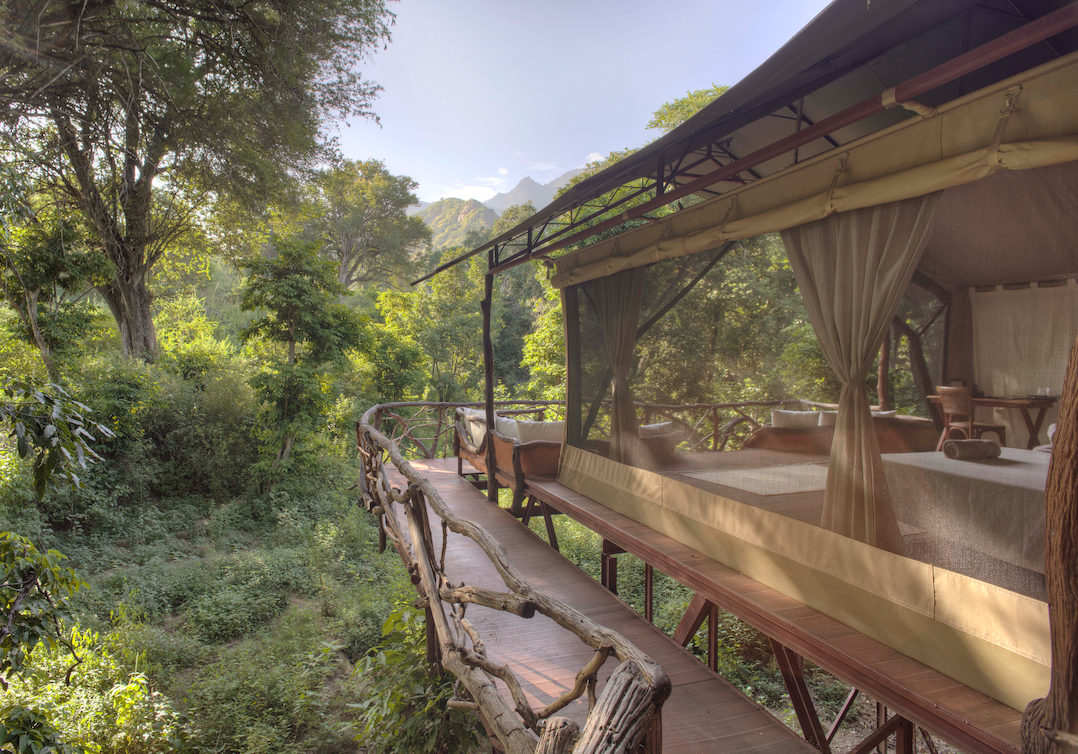
The catch is distance. Reaching the northern frontier is a real journey of flights and drives, and this is arid-and-forest country, not the classic big-cat plains of the Mara. Come for the immersion, the culture and the canopy, not to tick off lions. It rewards a couple of unhurried nights, not a rushed overnight.
The Mara sleep-out under the stars
Some Masai Mara camps offer a treehouse sleep-out on a platform attached to the main camp. You are walked out to a raised platform or nest-like bed overlooking the plains or a river bend, and you spend the night up there under the whole Milky Way with the sounds of the bush around you. It is one of the most romantic things you can do on safari, and it puts you closer to the night-time wilderness than almost anything else.
It suits couples, honeymooners and anyone who will trade facilities for a once-in-a-lifetime night. It features in our guide to romantic safari ideas in East Africa.

Keep in mind that this is one night, an add-on from your main camp and not a base. It is deliberately simple, it depends on the weather and it can get cold. Book it as the special night it is meant to be and it is magic. Treat it as a full stay and it will frustrate you.
The historic tree hotels: Treetops and The Ark
These two lodges stand in Aberdare National Park in central Kenya, the misty highlands sometimes called Scotland with lions. Treetops is the original Kenya treehouse. It was first built in 1932 and is known worldwide as the place where Princess Elizabeth spent the night in 1952 and, after her father died, came down the next morning as Queen. The original was burned during the Mau Mau uprising and rebuilt near the same waterhole. It has since been fully refurbished and reopened.
Styled like a ship on stilts, Treetops and its neighbour The Ark, a lodge shaped like Noah’s Ark, offer something no other treehouse type does. They sit over a floodlit waterhole and salt lick, and the wildlife comes to you, deep into the night. You may see elephant, buffalo and rhino, and with luck the elusive bongo, which lives only in the Aberdares. The Ark even has a ground-level bunker hide that puts you at eye level with the animals, a photographer’s dream.

They suit first-timers and families who will enjoy the theatre of the waterhole, history lovers, and anyone who wants a storied night instead of another luxury tent.
You go for the spectacle and the heritage, not the suite. The rooms are compact and old-world, charming but not luxurious. At nearly 2,000 metres it is properly cold at night, so pack warm layers. Most people treat it as a memorable one-night stop, checking in via the base hotels (the Outspan for Treetops, the Aberdare Country Club for The Ark) and not as a multi-night base. Set your expectations to atmospheric and historic, and it delivers.
Budget and coastal treehouses
Not every treehouse is a luxury safari. Near Diani on the coast you will find fun, rustic treehouse stays tucked into coastal forest, with canopy cabins, resident bushbabies, a backpacker feel and a beach a short walk away. A few smaller sanctuaries, such as Taita Hills near Tsavo, also have treehouse-style lodges built around waterhole viewing on a smaller scale.

These suit budget travellers, younger crowds and anyone who wants a quirky, affordable night in the canopy, often as a coastal add-on and not a wildlife safari. It is a fun stay, not a Big Five trip, so do not expect game drives or northern-frontier wilderness.
Who a treehouse safari in Kenya suits
A treehouse safari in Kenya is brilliant for couples and honeymooners, especially the sleep-outs. It works for families with older children too. The waterhole tree hotels are a joy for kids, though several treehouses set a minimum age of around six to eight. First-timers who want something beyond a standard lodge will enjoy it, as will photographers drawn to the waterhole hides and anyone who values atmosphere and immersion over polish.

It is not the right pick if you want a full-luxury base for a week, since most treehouse stays are a highlight and not a whole trip. It is also wrong for anyone chasing guaranteed big cats. Forest and waterhole treehouses are about different wildlife: elephants, forest species and the drama of the waterhole. And if remoteness, cold nights and simplicity do not appeal, look elsewhere.
Fitting a treehouse into your Kenya trip
For most travellers a treehouse is a highlight woven into a wider trip, not the trip itself. A Mara sleep-out is a single romantic night added to a stay at a main Mara camp, which makes it the easiest to slot in. An Aberdare tree hotel works well as a one-night stop on a wider circuit, roughly three hours from Nairobi and easy to pair with Mount Kenya or the central highlands. Sarara is more of a two-to-three-night northern leg, best combined with the wider Samburu and Lewa region.
If you are building a first Kenya trip, our first-timer’s guide covers the basics, and the best safari lodges in Kenya helps you choose where to base yourself around a treehouse night.
Frequently asked questions
What is the best treehouse in Kenya? It depends on what you want. For a luxury forest treehouse, Sarara in the north is the icon. For romance, try a Mara sleep-out under the stars. For heritage and the waterhole show, pick Treetops or The Ark in the Aberdares. There is no single best, only the right one for your trip.
Is Sarara Treehouses worth the journey? For the right traveller, yes. It is one of Kenya’s most special and immersive stays, and it is community-owned. Go knowing it is remote, arid-forest northern Kenya, and stay a couple of unhurried nights.
Are the Aberdare tree hotels worth it? Yes, if you know what they are. They are atmospheric, historic lodges built for watching wildlife come to a floodlit waterhole, not luxury retreats. The rooms are simple and it is cold at altitude, but the experience and history are unique in Kenya.
Can you sleep under the stars? Yes. Several treehouses and sleep-out decks, including at Sarara and various Mara camps, let you sleep in the open on the deck. It depends on the weather and can be cold, so it is usually a special one-night experience.
Are treehouse safaris good for families or honeymoons? Both, though different ones suit each. The waterhole tree hotels are wonderful for families, so check the minimum age at some camps. The Mara sleep-outs are pure honeymoon. Couples can start with romantic safari ideas in East Africa.
Planning a treehouse safari in Kenya
A treehouse night can be one of the most memorable parts of a Kenya safari, but only if it is the right one and sits well within the trip. That is what we do at Leopard Paw Safaris: match the experience to you and build a trip around it. If you would like help planning a treehouse safari in Kenya, get in touch. For more reading, try the best safari lodges in Kenya, what to wear on safari in Kenya and Kenya safari tips for first-timers.
Daisy is a former safari guide and the founder of Leopard Paw Safaris. You can reach her at info@leopardpawsafaris.co.ke or on +254 715 138325.
Comments