Safari Glamping in Kenya: What It Is and How to Choose
By Daisy, founder of Leopard Paw Safaris and a former safari guide.

Glamping is one of travel’s trendiest words, but for safari glamping in Kenya the plain fact is that you’ll almost certainly do it whether you call it that or not. A safari tent here isn’t a sleeping bag on the ground. It’s a canvas suite with a proper bed, an en-suite bathroom and a veranda over the plains. Glamping isn’t a niche extra on a Kenyan safari. It’s close to the default. Here’s what it is, the huge range it covers, and how to choose well.
What safari glamping in Kenya is

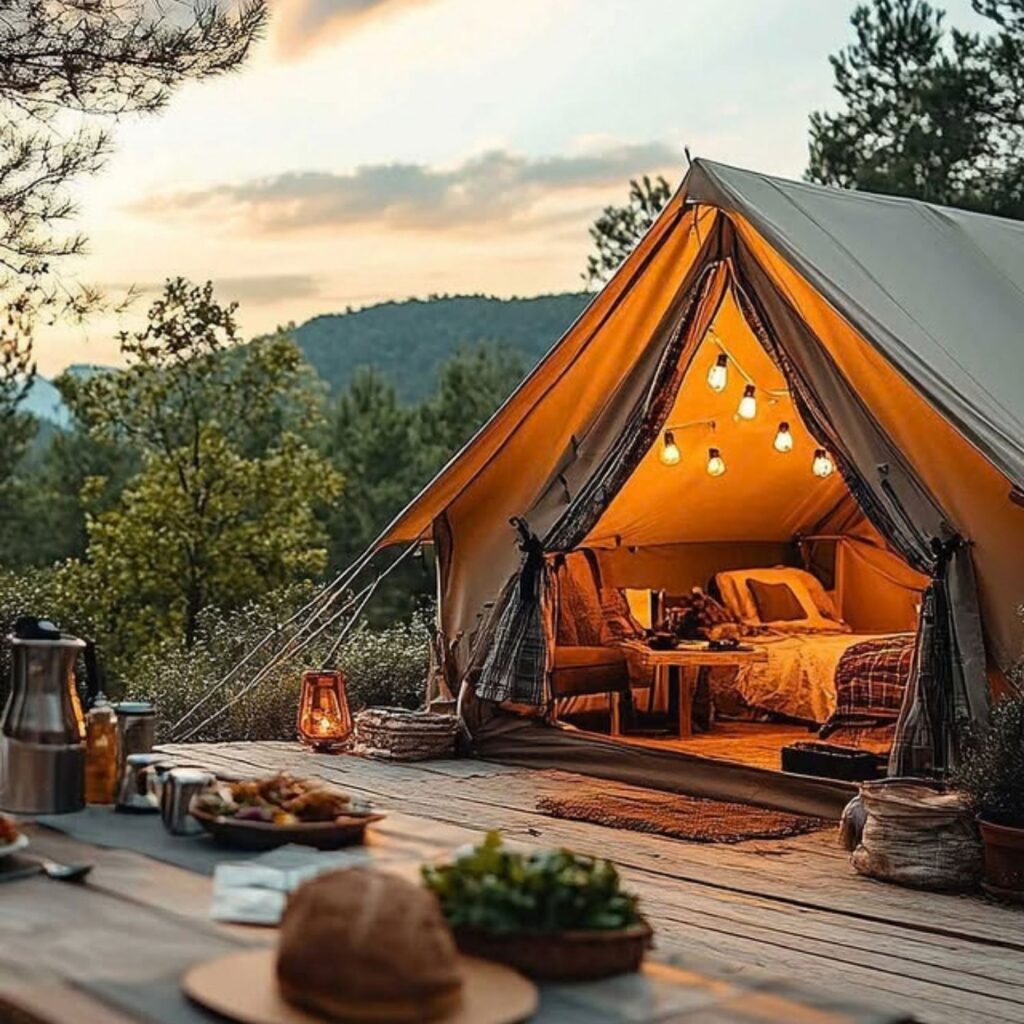
Strip away the buzzword and it’s simple: luxury tented camps. The walls are canvas, but inside you’ll find a real bed, often a four-poster, an en-suite bathroom with a hot shower, proper furniture, and a private veranda or deck looking out over the bush. You get the immersion of sleeping in the wild and real comfort at the end of the day. It isn’t camping as most people picture it, and it isn’t a special upgrade. It’s how most Kenyan safari camps are built.
Glamping covers a huge range

This matters, and nobody mentions it. Glamping in Kenya runs from affordable, comfortable mid-range tented camps, with a good bed, hot water, a pool, simpler furnishings and excellent value, right up to the ultra-luxury end, with private plunge pools, butler service and design-magazine interiors. The word tells you almost nothing about the price or the luxury level. So don’t book on the label alone. Look at what’s included, the location and the size of the camp. For our picks across that whole range, see the best safari lodges in Kenya.
Why glamping is often the best way to stay on safari

Tented camps aren’t a compromise. Often they’re the better choice. Tents are lighter on the land and quicker to put up and take down, so they can sit in remote, exclusive, low-impact spots that a permanent concrete lodge never could, often closer to the wildlife and far from the crowds. Some tented camps are fully mobile and move with the migration to keep you in the thick of it. And there’s the immersion. With only canvas between you and the bush, you fall asleep to the whoop of a hyena and the roar of a distant lion, and wake to birdsong and passing hooves. That closeness is the point of a safari, and a tent gives you more of it, not less.
What to expect from canvas

You’ll get a real bed, an en-suite bathroom and hot water, sometimes solar-heated, sometimes a charming bucket shower or a lovely open-air one. You’ll also get a veranda, wonderful food and your game drives. But it is canvas, so a few things come with it. You’ll hear everything, which is thrilling and occasionally startling at 2am. It gets properly cold at dawn, so warm layers matter more than people expect. There are no solid walls or locks, so staff will escort you to your tent after dark and you stay inside at night. Power and wifi are often limited or solar, especially at remote camps. None of this is a downside once you expect it. It’s part of the magic. (For the cold dawns and what to pack, see what to wear on safari in Kenya.)
Where to go

Glamping is everywhere on a Kenyan safari, across the Masai Mara, Amboseli, Laikipia and Samburu, each with the full spread from mid-range to ultra-luxury. For the migration, look at mobile tented camps that follow the herds. For the specific camps I rate, the lodges guide is the place to start. For the more unusual end of life off the ground, treehouse stays and sleep-outs are a world of their own. And if romance is the aim, see our romantic safari ideas.
How to choose your glamping

Beyond the region, weigh three things. The first is budget: a comfortable mid-range camp or full ultra-luxury, remembering that both are glamping. The second is style: mobile or permanent, and the classic Out of Africa look of canvas and campaign furniture against sleek contemporary design. The third is who’s travelling: family tents and interconnecting options, or an intimate camp for a honeymoon. Then look past the label to what shapes your trip: the location, whether that’s a private conservancy or the busy reserve, the size of the camp, and the quality of the guiding and vehicles. (New to all this? Start with our Kenya safari tips for first-timers.)
Frequently asked questions
What is safari glamping in Kenya? Staying in a luxury tented camp. The walls are canvas, but inside you get a real bed, an en-suite bathroom and proper comforts. It’s how most Kenyan safari camps are built.
Is safari glamping real camping? Not in the roughing-it sense. You get the feel of sleeping under canvas in the wild, with the comforts of a good hotel room inside the tent.
How much does safari glamping cost? It spans a huge range, from affordable mid-range camps to ultra-luxury. The word alone doesn’t set the price, so always check what’s included.
Are glamping tents comfortable? Yes. Real beds, hot showers, en-suite bathrooms and private verandas are standard, and the luxury rises from there.
Do the tents have bathrooms and electricity? Almost always en-suite bathrooms with hot water. Electricity is usually provided but may be solar and limited at remote camps, and wifi is often patchy.
Is glamping safe with only canvas walls? Yes. Camps are well run, and because there are no solid walls, staff escort you to your tent after dark and you stay inside at night.
Where’s the best place for safari glamping in Kenya? All the main regions offer it: the Mara, Amboseli, Laikipia and Samburu, with mobile camps for the migration.
Is it good for families or honeymoons? Both. Many camps have family tents, and the intimate luxury ones are wonderful for honeymoons.
Choosing the right glamping camp

On a Kenyan safari, glamping isn’t the question. It’s a given. The real skill is matching you to the right camp, at the right level, in the right spot, for the way you want to travel. That’s what we do at Leopard Paw Safaris. If you’d like help planning yours, get in touch. For the camps themselves, start with our best safari lodges in Kenya.
Daisy is a former safari guide and the founder of Leopard Paw Safaris.
Comment