


Safari Scarf Styling Tips
A scarf is one of the most useful things you can pack for a safari. It protects you from sun and dust during the day and keeps you warm when it cools off, and it can lift a simple neutral outfit. Here’s how to choose one and wear it well.
Why bring one
- Evenings get chilly. One safari guide recommends always carrying a warmer layer, like a fleece, jacket, beanie or scarf, to dinner by the fire.
- Days are hot and dusty. A light scarf covers your neck from the sun and your face from dust on open-top drives.
- Style. Safari fashion guides suggest a scarf and belt as an easy way to change up an outfit.
Choose the right color and fabric

- Stick to neutrals. Greens, beige, browns, and khaki help you blend in with your surroundings. Safari style guides also list tan, cream, and gold as safe choices.
- Avoid blue and black. They stand out in the bush, and they’re commonly advised against because they attract tsetse flies in some areas.
- Pick the fabric for the job. Lightweight cotton or linen suits hot, dusty days. A soft wool or fleece blend is better for early mornings and evenings.
- Pattern is fine in moderation. Animal prints and earthy tones work. Skip loud, bright colors.
Six ways to wear it
- The neckerchief: fold the scarf into a triangle, wrap it twice around your neck and tie snugly with the point against your chest. It’s a clean, classic look that also shields your neck from the sun.
- The simple loop: fold it lengthwise, drape it around your neck and tie the ends. It’s easy to adjust for warmth.
- The French knot: fold lengthwise with one end longer, then knot loosely for an effortless look.

- The dust cover: pull the scarf up over your nose and mouth on bumpy, dusty drives, then drop it back around your neck when you stop.
- The headband or bandana: fold it diagonally, place it on your head and tie it at the back to keep hair and sun off your face.
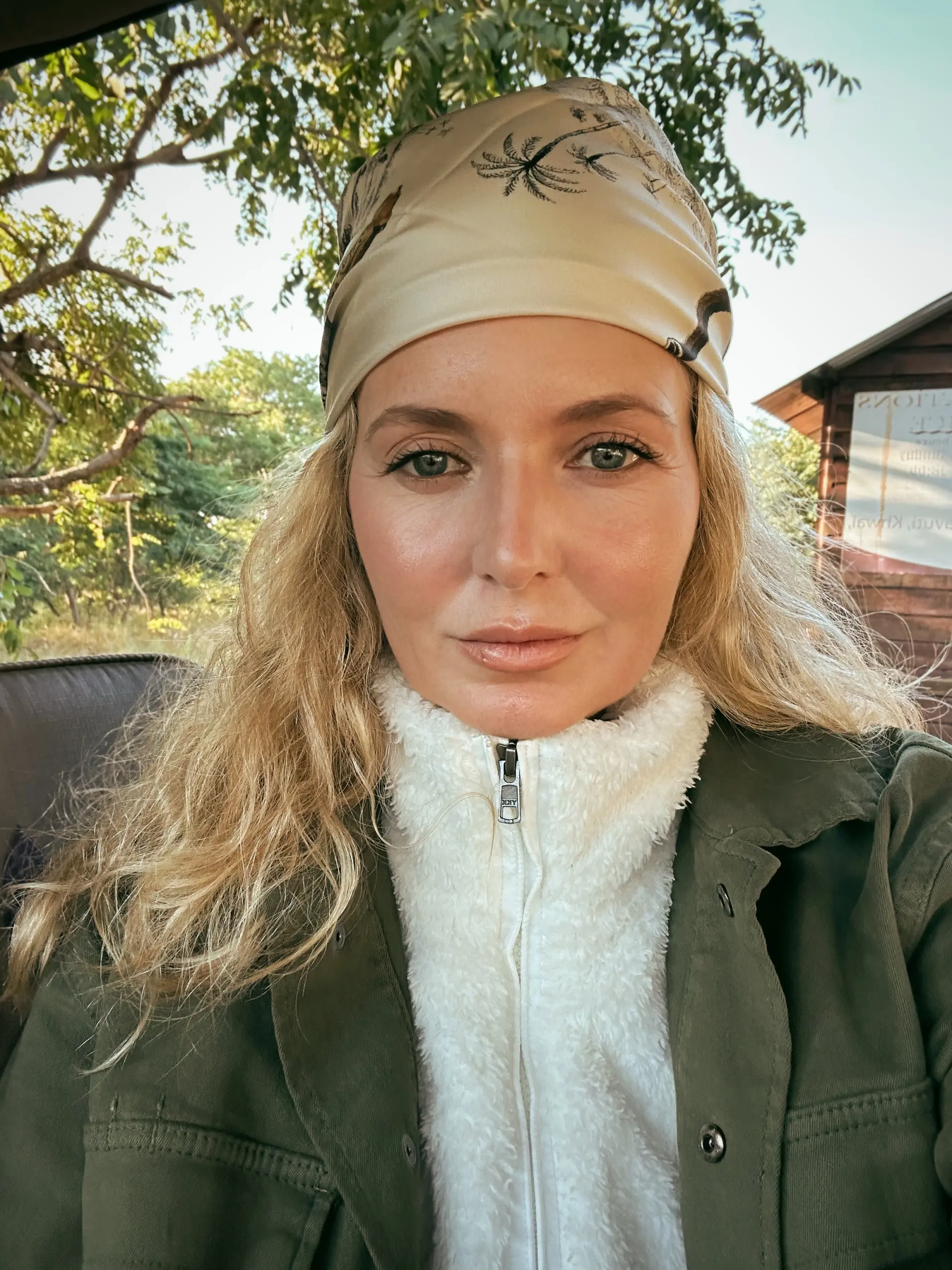
- The belt or bag tie: fold a triangle into a narrow band and tie it at your waist, or knot it on a bag handle for a pop of color.
Practical tips
- Pack two: a light one for the day and a warmer one for evenings.
- Keep it in a daypack. Mornings start cold and warm up fast.
- Tie it snugly on open vehicles so it doesn’t blow away or catch on equipment.
- Wash it after dusty days. Fine dust dulls light colors quickly.
Conclusion
A good safari scarf does three jobs: it protects you from sun and dust, keeps you warm after dark, and finishes an outfit. Choose a neutral color in a fabric that suits the time of day, learn two or three quick knots, and keep it close in your daypack. Skip blue and black, and bring a second, warmer one for the evenings.
Related reading
- What to wear on safari in Kenya: the full outfit guide.
- Khaki safari outfit ideas: styling your scarf with neutrals.
- Kenya safari packing list: everything to bring.
- African safari packing list for women: layers and accessories.