Night Game Drive in Kenya: Where to Do One and What You’ll See
By Daisy, founder of Leopard Paw Safaris and a former safari guide.

A night game drive in Kenya shows you a different country. The plains you crossed by day belong to another cast after dark. Leopards are hunting instead of dozing in a tree, and a parade of animals most visitors never knew were there comes out. It’s one of the most thrilling things you can do on safari. There’s one catch that decides whether you can do it at all: you can only take a night drive in certain places. Here’s where, what you’ll see, and how to do it well.
Where you can and can’t do a night game drive

This catches people out. Night game drives are not permitted inside Kenya’s national parks and reserves. The Masai Mara National Reserve, Amboseli and the rest are managed by the Kenya Wildlife Service, and they close at dusk. There’s no driving after dark.
Where you can do them:
- Private conservancies. That means the Mara conservancies, such as Mara North, Naboisho and Olare Motorogi, which border the reserve, and the Laikipia conservancies, including Ol Pejeta. They’re privately or community managed, and a night drive is one of the things you get with them.
- Nairobi National Park is the useful exception. It runs special organised night drives with armed rangers, which helps if you’re short on time or have a long layover in the city.
So if a night drive is on your wishlist, it decides where you stay. Book a conservancy, not the busy reserve. (Our best safari lodges in Kenya guide flags which camps sit in conservancies.)
Why a night drive is the clearest reason to pick a conservancy

When you plan a trip you’ll hear about the difference between the national reserve and the private conservancies: off-road driving, walking safaris, fewer vehicles at a sighting. The night drive is the starkest example, because it’s black and white. In the reserve it’s impossible, and in a conservancy it’s simply something you can do. Of all the reasons to base yourself in a conservancy, this one has no grey area. (More on that choice in our lodges guide.)
What you’ll see on a night drive

The cast changes almost completely after dark, and that’s the whole point.
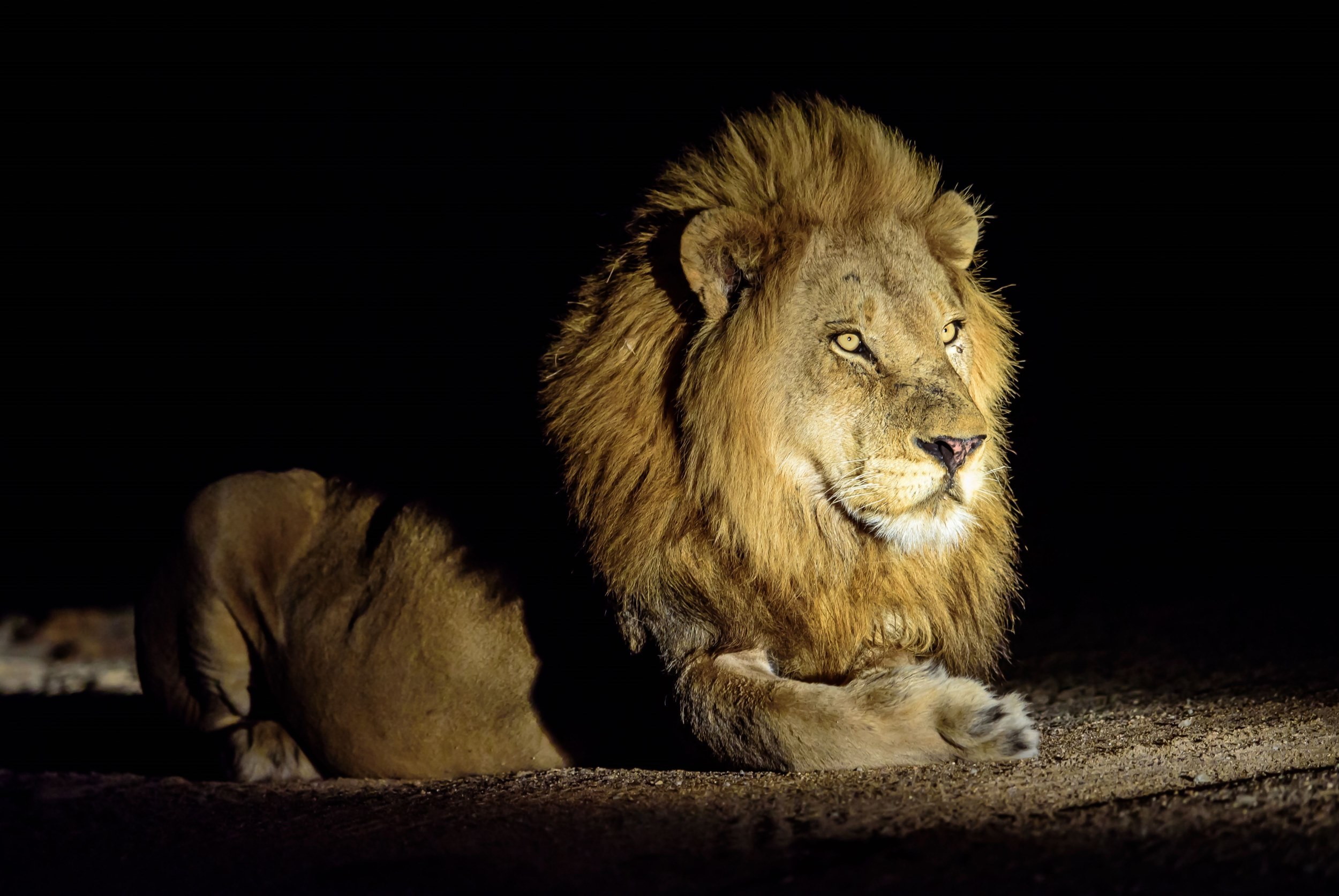
The predators change. The leopard draped along an acacia branch at three in the afternoon was resting. At nine at night it’s on the ground, moving fast and hunting. Lions go from lazy to lethal. Watching a big cat hunt by spotlight is something you won’t forget. (For the daytime cast, see the Big Five in Kenya.)

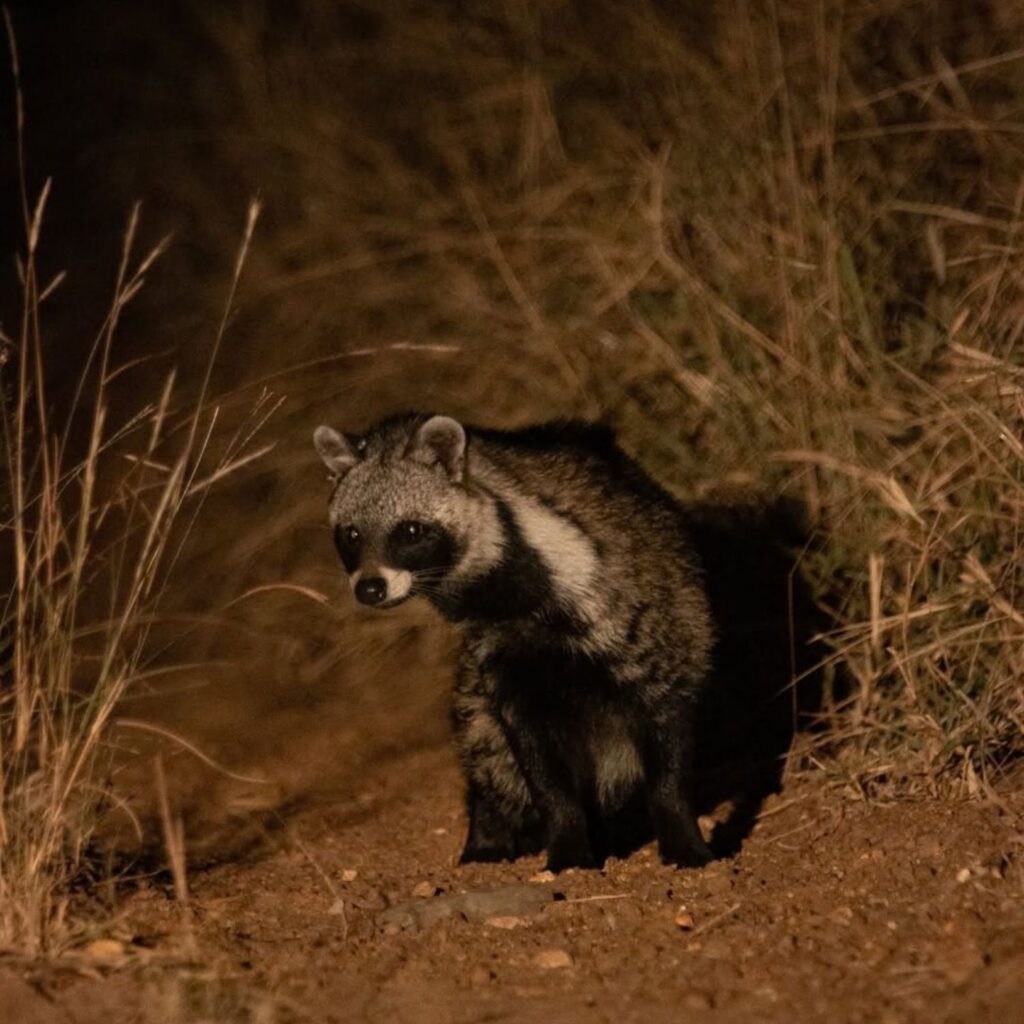
The nocturnal specials come out. This is your chance to see animals that most day visitors never know are there. They include the aardvark, a holy grail for wildlife photographers, plus bat-eared foxes, the aardwolf, porcupines, civets and genets, white-tailed mongoose, honey badgers, and bushbabies leaping between branches. You might also see a caracal or a serval.
And there’s the sound: owls, nightjars and the whole orchestra of the dark.
It’s a different safari, not the day repeated with the lights off.
How a night drive works
You head out in an open vehicle after sunset, sometimes straight after dinner, for around three hours. A powerful spotlight sweeps the bush, and at some camps each guest gets a light so you can join in the spotting. A licensed guide runs it, and it’s usually an extra cost on top of your stay. People underestimate how cold it gets once the sun is down and you’re moving through the night air, so bring proper warm layers. (See what to wear on safari in Kenya.)
Watching wildlife after dark, responsibly
A spotlight is intrusive if it’s misused, so how a night drive is run matters. Good operators use red-filtered spotlights, because nocturnal animals’ eyes are far more sensitive to white light than to red. They keep vehicle numbers low, with a couple at most at any sighting. They stay well back from an animal that’s hunting or feeding, cut the engine on long stops, and never hold the beam on an animal’s eyes. None of this spoils the experience. It’s what separates a responsible night drive from a harmful one, so pick a guide and a conservancy that follow it.
Is a night game drive worth it?
For most people, yes. It’s a different experience and often a highlight of the trip, especially for the predator action and the rare nocturnal species you can’t see any other way. The caveats are that it costs extra, it’s cold, and the rarest sightings, such as an aardvark, are never guaranteed. Go for the after-dark atmosphere and the changed plains rather than fixating on one animal, and you’ll come back happy.
Frequently asked questions
Can you do a night game drive in the Masai Mara? Not inside the national reserve. You can in the surrounding private conservancies, such as Mara North, Naboisho and Olare Motorogi.
Where can you do night game drives in Kenya? In the private conservancies of the Mara and Laikipia, including Ol Pejeta, and on the organised night drives in Nairobi National Park.
What animals will you see on a night drive? Nocturnal predators on the hunt, such as leopard and lion, plus specials like aardvark, bat-eared fox, aardwolf, civet, genet, porcupine and bushbaby.
Are night game drives ethical? They can be, if they’re done responsibly, with red-filtered spotlights, low vehicle numbers, a respectful distance and no beam shone into animals’ eyes. Choose an operator that does this.
How long is a night drive, and how much does it cost? Usually about three hours, and typically an extra cost on top of your accommodation.
Is a night game drive worth it? For most people, yes. It’s a different safari and a real highlight. Go for the atmosphere, not for one guaranteed animal.
Can you do a night safari near Nairobi? Yes. Nairobi National Park runs organised night drives, which suit layovers or limited time.
Planning a night game drive in Kenya
A night drive is one of the great safari experiences, but only if you’re staying somewhere you can do one, with a guide who does it right. We plan that at Leopard Paw Safaris: a conservancy base where the after-dark world is open to you, run responsibly. If you’d like help planning yours, get in touch. If it’s your first safari, start with our Kenya safari tips for first-timers.
Daisy is a former safari guide and the founder of Leopard Paw Safaris.