By Daisy, founder of Leopard Paw Safaris and a former safari guide.
The Great Migration in Kenya is one of the most spectacular wildlife events on Earth, and a main reason travellers visit each year. More than 1.5 million wildebeest, with hundreds of thousands of zebras and gazelles, travel across the Serengeti and the Maasai Mara in search of fresh grazing and water. Along the way they face river crossings, strong predators and the challenges of the wild.
This guide covers when to visit, where to stay, what wildlife to expect and how to get the most from your safari. If you want a short trip to go with it, see our 3-day Maasai Mara safari.
What the Great Migration is
The Great Migration is an annual movement of over 1.5 million wildebeest, about 200,000 zebras and hundreds of thousands of Thomson’s gazelles. They do not follow a fixed route. The herds move in a continuous cycle driven by rainfall and the search for fresh grass and water. The journey covers nearly 3,000 kilometres each year between the Serengeti in Tanzania and the Maasai Mara in Kenya. On the way the animals meet crocodile-filled rivers, stalking predators and changing landscapes.
When the Great Migration reaches Kenya
The migration goes on all year, but the most popular time to see it in Kenya is July to October, when the herds arrive in the Maasai Mara.
In July the first herds begin crossing into the Mara from Tanzania. Wildlife activity rises and predator sightings become more frequent. August is considered one of the best months, with large numbers of wildebeest along the Mara River, where dramatic crossings often take place. In September the migration peaks, with huge herds spread across the Mara and outstanding game viewing throughout the reserve. In October many animals remain in Kenya before they start heading south as the short rains approach.
Why the river crossings are so famous
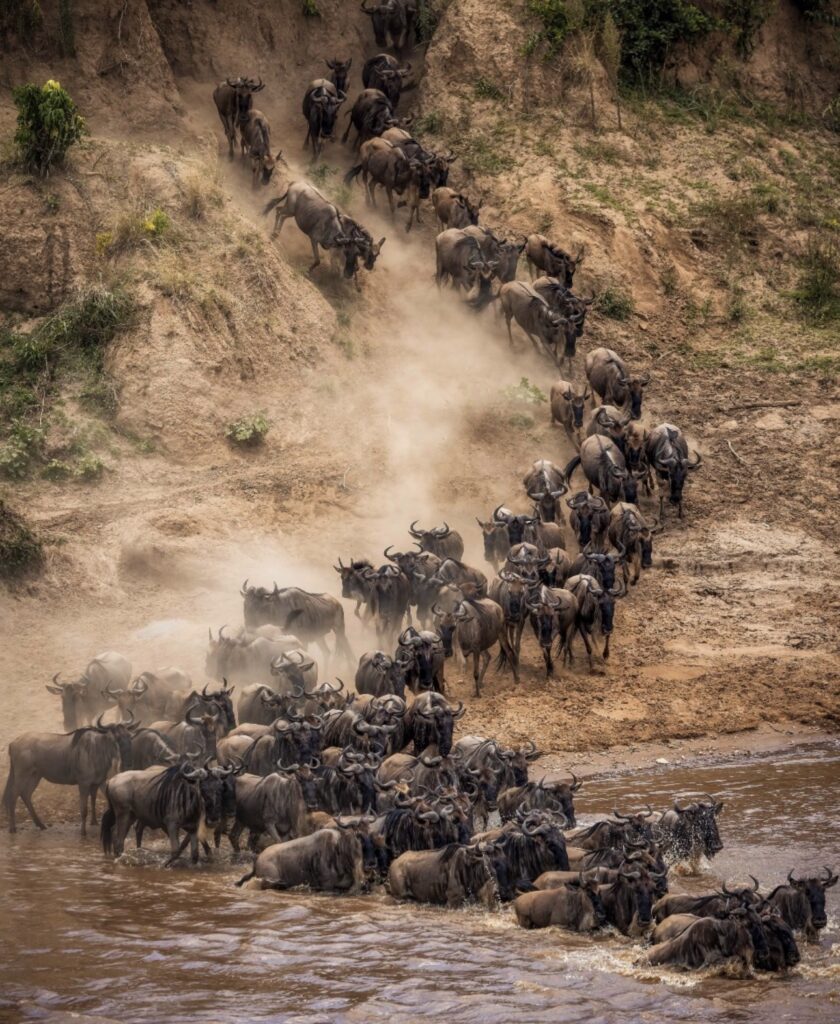
The Mara River crossings are among the most dramatic moments of the migration. Thousands of wildebeest gather on the banks, sometimes waiting for hours until one animal finally leaps into the water. Once that happens, the rest often follow in a rush. Strong currents, steep banks and large Nile crocodiles make each crossing dangerous, and even on the far bank, lions, leopards and hyenas often wait nearby. No two crossings are the same.
Which animals you will see
The migration is extraordinary, but the Mara offers exceptional wildlife through your whole safari. In migration season you may see wildebeest, zebras, Thomson’s gazelles, lions, leopards, cheetahs, African elephants, Cape buffalo, spotted hyenas, hippos, Nile crocodiles, giraffes, jackals and hundreds of bird species. The abundance of prey also draws many predators, which makes this one of the best places in Africa to see natural hunting behaviour.
Best time to see river crossings
Crossings can happen at any time in migration season, but August and September generally give you the best chance. Wildlife is unpredictable, though, and no operator can guarantee a crossing. Patience is often rewarded, and spending extra time near known crossing points improves your odds.
How many days to spend in the Maasai Mara
If you hope to experience the Great Migration in Kenya, plan at least three to four nights. That gives you time for several game drives and a better chance of seeing different wildlife behaviour, including a possible river crossing. If your schedule allows, five or more days make the safari even richer.
Where to stay
Accommodation ranges from budget camps to luxury tented lodges. Staying near the Mara River can cut travel time to popular crossing areas in migration season. Whatever you choose, book several months ahead, because July to October is the busiest safari season. Our guide to the best safari lodges in Kenya can help you choose.
Photography tips
The migration is a great subject for wildlife photography. Bring a zoom lens if you use a DSLR or mirrorless camera, and keep spare batteries and memory cards. Wear neutral-coloured clothing and be patient during river crossings. Make use of the morning and evening light, and listen to your guide, who understands animal behaviour and positioning.
Combining the migration with other parks
Many visitors pair the Maasai Mara with other destinations to see more of Kenya. Popular combinations include Amboseli National Park for elephants and Mount Kilimanjaro views, Lake Nakuru National Park for rhinos and flamingos, Ol Pejeta Conservancy for chimpanzees and rhino conservation, and Diani Beach or Mombasa for a relaxing beach holiday after the safari. Combining places gives you different landscapes, wildlife and activities in one trip.
Travel tips
Book early, especially for July to October. Carry binoculars, pack warm clothing for early drives and bring sunscreen, a hat and sunglasses. Keep your camera ready at all times, follow your guide’s instructions and respect the wildlife.
Frequently asked questions
Is the Great Migration guaranteed? No. It follows rainfall and animal behaviour, so exact timing changes each year. July to October generally gives excellent chances in the Maasai Mara.
Is August the best month? It is often seen as one of the best, because many river crossings happen then, though sightings can never be guaranteed.
Can children enjoy the migration? Yes. Families often find it fascinating, and many lodges welcome children and offer family-friendly safari experiences.
Is the Great Migration worth it? Yes. Watching thousands of animals cross the savannah, seeing predators and prey interact and soaking up the raw beauty of the wilderness make it one of the most extraordinary wildlife experiences on the planet.
Plan your Great Migration safari in Kenya
The Great Migration in Kenya is more than a wildlife event. It is a journey through one of Africa’s most remarkable ecosystems. Planning ahead gives you the best choice of lodges, experienced guides and travel dates in this popular season. If you are ready to go, our team can build an itinerary around your interests, budget and travel style. Get in touch to start.
Daisy is a former safari guide and the founder of Leopard Paw Safaris. You can reach her at info@leopardpawsafaris.co.ke or on +254 715 138325.