Camel Safari in Kenya: What to Expect
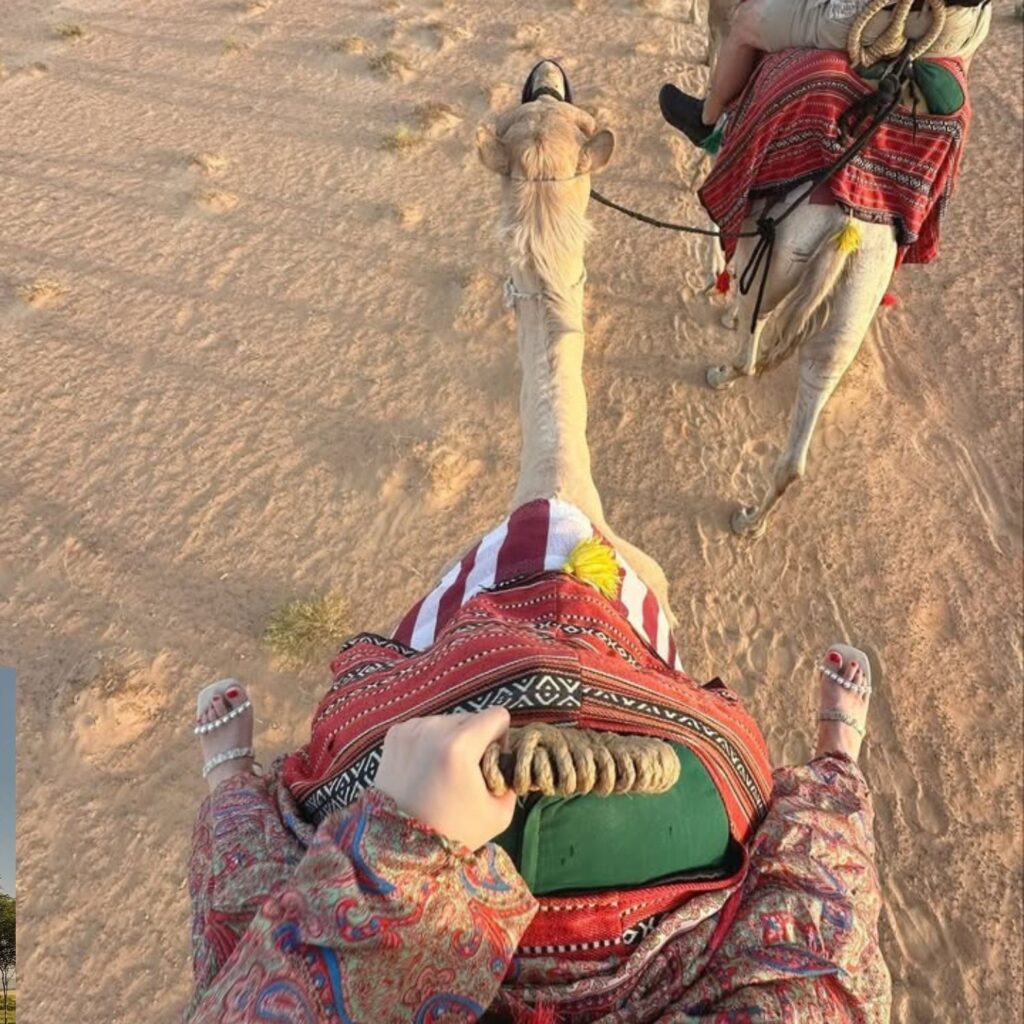
A camel safari in Kenya is a different way to see the country’s wild country. Instead of spending the whole day in a 4×4, you explore remote areas at a slower pace, either riding a camel or walking alongside one.
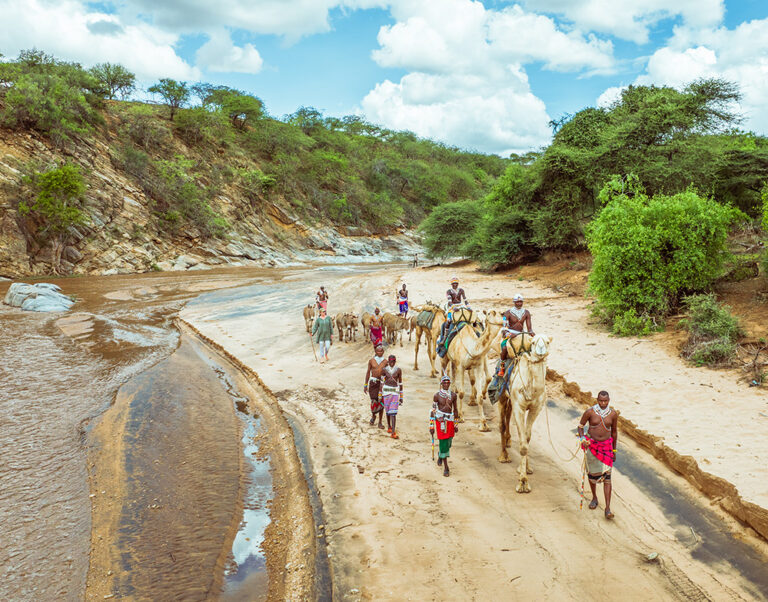
Camels work well in the dry country of northern Kenya and Laikipia. Depending on the safari, they might carry camping gear, food and supplies while you walk, or they might be your ride. That makes a camel safari suit anything from a short outing to a multi-day walking trip.
Where to go on a camel safari in Kenya
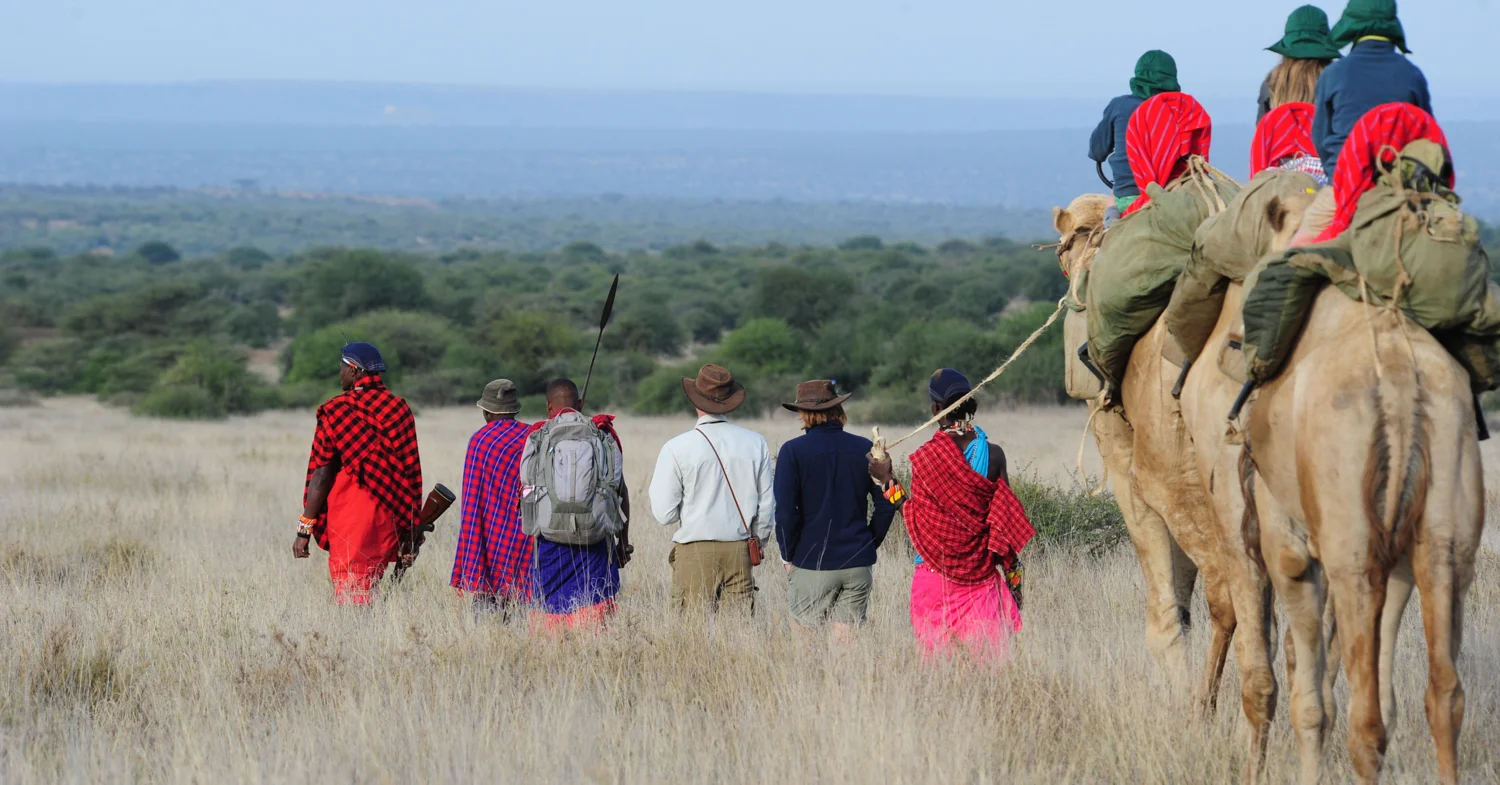
Camel safaris are most closely linked with Laikipia and northern Kenya, where the dry terrain, open country and established walking-safari operators make them a natural fit.
Laikipia
Laikipia is one of Kenya’s main areas for camel-based walking safaris. Trips range from short walks and day outings to overnight adventures in the bush.
One attraction is getting away from the main safari roads. Instead of driving between wildlife spots, a camel safari takes you through country that’s better explored on foot. Some operators use camels mainly as pack animals, so you walk while they carry the equipment.
Samburu and northern Kenya
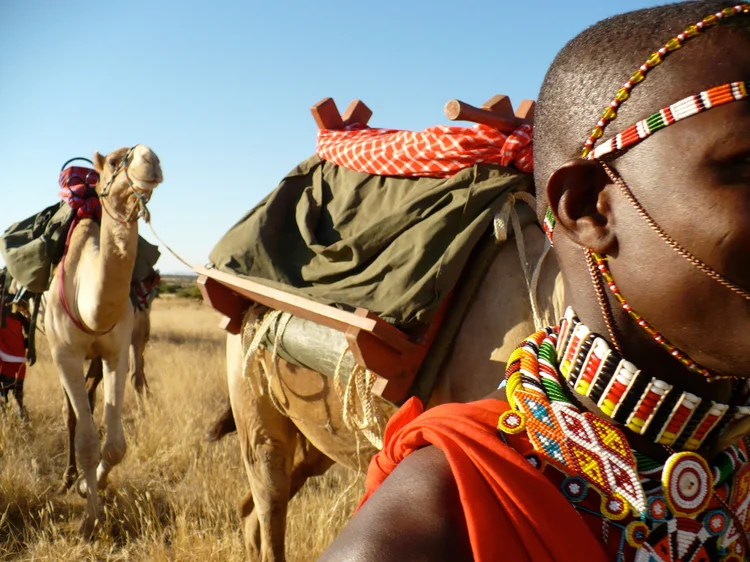
Samburu and the wider north are also well known for camel experiences. The dry plains, rugged hills and traditional pastoral scenery make a distinctive setting. Some trips are built around riding, and others combine walking with camels carrying supplies.
What a camel safari is like
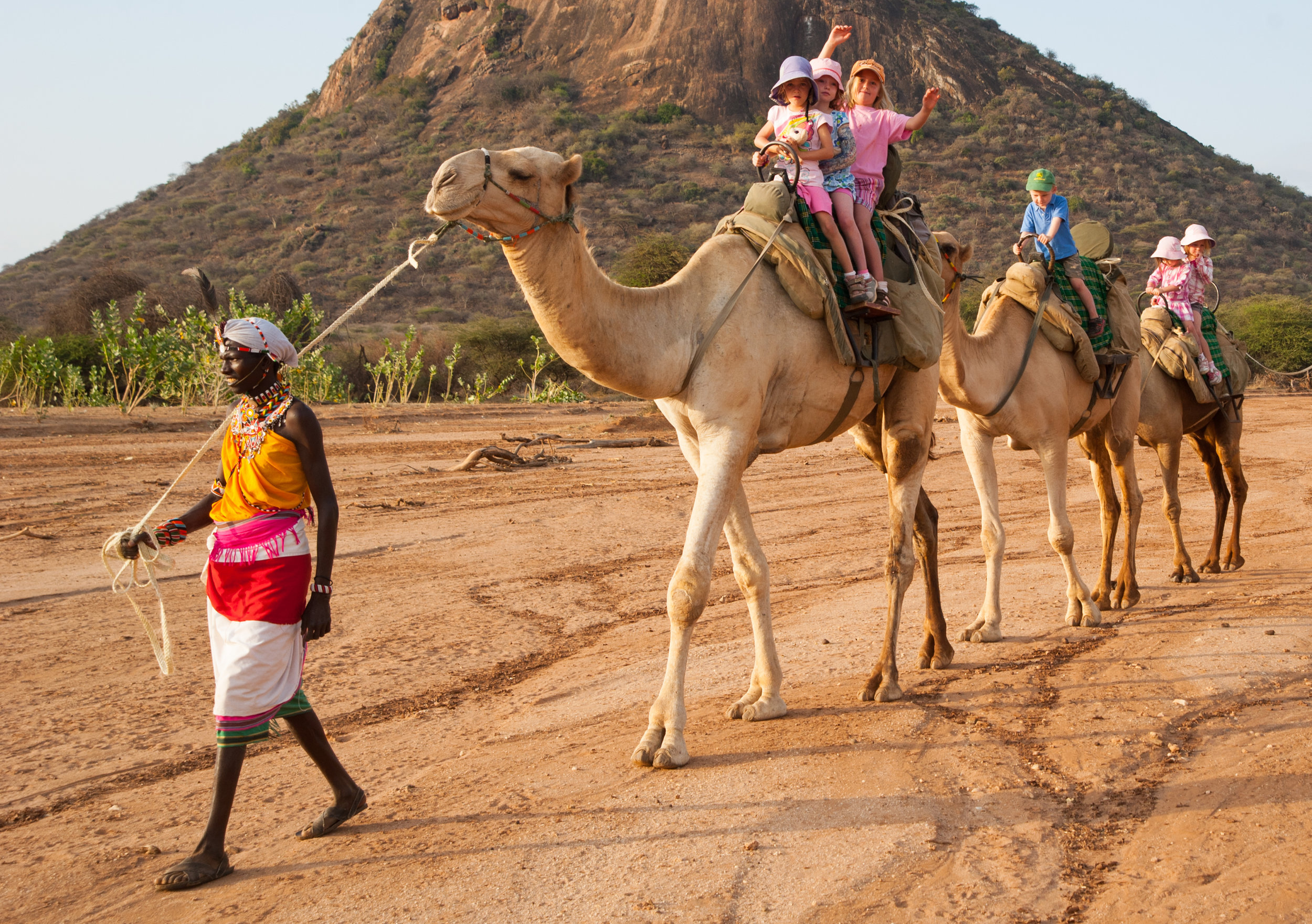
There’s no single format. It depends on the operator, the place and the length of the trip.
A shorter trip might be an hour or a few hours in the saddle, sometimes with a stop for a meal or another activity. Some are half-day or full-day outings. Longer camel safaris can mean walking through the bush for several days, with camels carrying tents, food and camping gear so you can reach remote areas without hauling everything yourself.
The pace is slower than a vehicle safari, which gives you more time to notice the land, the plants and the small details around you.
You may see wildlife, but don’t approach a camel safari like a game drive. The focus is usually the walking, the scenery and the remote country, not covering ground to find as many animals as possible.
How much does a camel safari cost?

Prices vary a lot depending on the type of experience. A short camel ride or day trip generally costs less than a private multi-day walking safari with camping. What moves the price:
- Length of the safari
- Whether it’s private or shared
- Accommodation and camping arrangements
- Meals and drinks
- Guide and support staff
- Transport to and from the safari area
- Whether camels are used for riding, carrying equipment, or both
To compare prices properly, look at what’s included rather than only the daily rate. Transport, accommodation and activities may be priced separately, depending on the operator.
Best time for a camel safari

You can do a camel safari at different times of year, but conditions matter, because so much of it is outdoors and involves a lot of walking.
The dry seasons give good conditions for northern Kenya and Laikipia, though daytime temperatures can be high, so early starts make the walking more comfortable. The wetter periods bring greener scenery and different wildlife conditions, but rain can affect roads and walking. If you’re planning a multi-day trip, ask the operator about the expected weather and ground conditions before you book.
What to bring on a camel safari

Packing is much like packing for a walking safari. Useful essentials include:
- Comfortable walking shoes
- Lightweight, breathable clothing
- A hat and sunglasses
- Sunscreen
- A reusable water bottle
- Insect repellent
- Camera and binoculars
- A light jacket or warm layer for cool mornings and evenings
For overnight trips, your operator should give you a specific packing list. Don’t bring more than you need, especially if you’re travelling on foot.
Camel safari vs a traditional safari

The two are very different. A 4×4 safari covers large distances quickly and suits visitors who want to search for wildlife across several areas. A camel safari is slower and more about the journey. You spend more time walking or moving at a relaxed pace through the country, with camels carrying supplies on longer trips.
Neither replaces the other. A camel safari works best as a different way to see Kenya’s wilderness, especially when you combine it with a conventional game drive.
Camel safari in Kenya FAQ
Can you ride camels on safari in Kenya?
Yes. Some safaris involve riding, particularly in northern Kenya and Laikipia. Others are walking safaris where camels carry equipment and aren’t ridden.
Where can I go on a camel safari in Kenya?
Laikipia and northern Kenya, including the Samburu region, are the main areas.
How long does a camel safari take?
Anything from a short ride or a half-day or full-day outing to a multi-day walking safari with camels carrying camping equipment.
Do I need previous camel-riding experience?
Not for every trip. It depends on the operator and how much riding is involved. If you’ve never ridden a camel, check with the operator before booking.
Seeing Kenya at a different pace

A camel safari in Kenya is a slower, more immersive way to see the wilderness. Whether you choose a short camel ride in Laikipia or a multi-day walk through the north, it’s less about covering ground and more about taking in the land up close. If you want something beyond the usual 4×4 game drive, it’s an unusual and memorable addition to a Kenya safari.