Fly-In Safari in Kenya: Is Flying Worth It?
By Daisy, founder of Leopard Paw Safaris and a former safari guide.

A fly-in safari in Kenya is usually sold as the ultimate luxury upgrade: tiny planes, exclusive camps, champagne on a bush airstrip. Strip away the marketing and it’s simpler. A fly-in safari is a way of buying time. Whether that time is worth the extra money depends on the trip you’re taking. Here’s how it works, what it costs you and saves you, and whether you should fly or drive.
What a fly-in safari is

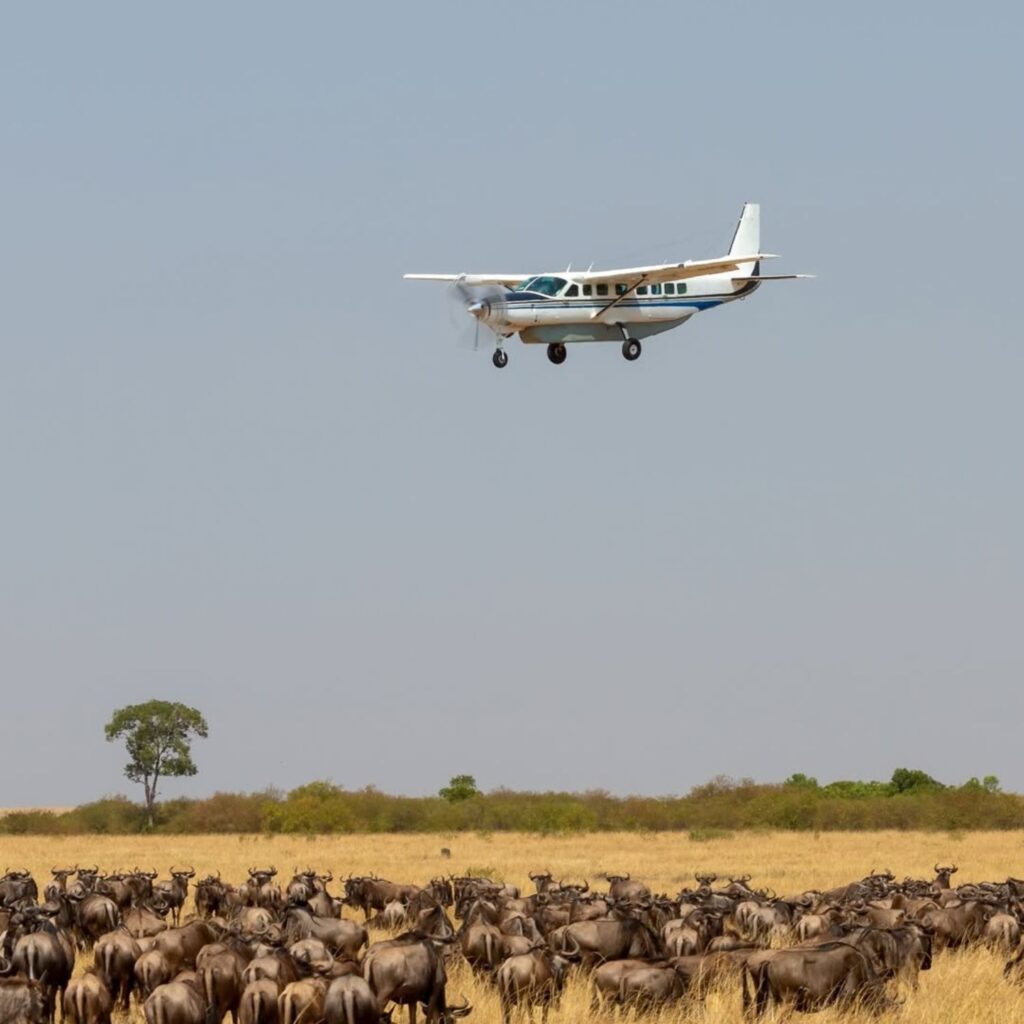
Instead of driving between parks, you fly in light aircraft from Wilson Airport, Nairobi’s small-plane hub (not the international JKIA), onto dirt airstrips near or inside the reserves. You’re met there and driven the last short stretch to camp. The hops are quick, usually 45 minutes to an hour. Flights come in two forms: scheduled “seat-in” services, where you share the plane on set departure times, and private charters, which cost more but fly on your schedule. The arrival lives up to its reputation. Dropping onto a strip in the middle of the plains, with nothing around but bush, never quite stops feeling dreamlike.
What you gain

Mostly time, and time is the real product here.
Do the maths. Driving from Nairobi to the Mara is five to six hours each way, and Samburu is around seven, on rough roads. A seven-day trip covering three parks by road can burn 15 to 20 hours in transit. The same circuit by air is under four hours in total, and those hours are scenic instead of spent jolting down a corridor. That difference is the whole argument.
Flying also means you arrive fresh instead of shaken, so you have the energy for the dawn game drives that matter. It opens up remote camps and private conservancies that are impractical to reach by road. It lets you run a multi-region circuit without backtracking to Nairobi, hopping from the Mara to Samburu to Amboseli directly. And the aerial views of Kilimanjaro, the Rift Valley and herds strung across the plains are a bonus.
What a fly-in safari costs you

The money first. Flying adds a lot to the bill, roughly several hundred dollars per person for each hop, and that stacks up across a circuit. The luxury guides skip the other costs, so go in knowing them:
- Strict luggage. Light aircraft mean a soft-sided bag and a tight weight limit, usually around 15kg including hand luggage, weighed at the strip. No hard cases. (See our Kenya safari packing list for how to pack to it.)
- Small planes. They’re safe and routine, but they’re small, with four to twelve seats. If you’re a nervous flyer, bumpy air over the hot plains comes with it.
- You lose the journey. By road you see the Rift Valley, the farmland, the towns and roadside life, the texture of Kenya between the parks. Fly, and you skip all of it. For some travellers that ground-level journey is half the trip.
Fly or drive: when each makes sense

This is the decision that matters.
Fly-in makes sense when:
- Your trip is short, say ten days or fewer, and you want to get the most time in the parks.
- You’re combining several regions, or remote ones.
- You value arriving fresh and comfortable, and you can budget for it.
- It’s a honeymoon or you’re short on leave. When time is the scarce resource, flying buys you more of what you came for.
Driving (a road safari) makes sense when:
- You’re watching the budget. Road is much cheaper. (See how much a Kenya safari costs.)
- You want the journey, with the freedom to stop, the scenery and the local interaction.
- You’re a group or family keeping costs down, because a shared vehicle spreads the expense.
- You’re doing a single, relatively close park where the drive isn’t punishing.
- You’re going fully independent. In that case, see our self-drive safari guide.
Fly-in isn’t better. It’s a trade of money for time and reach. Match it to your trip, not to the marketing.
A realistic fly-in circuit
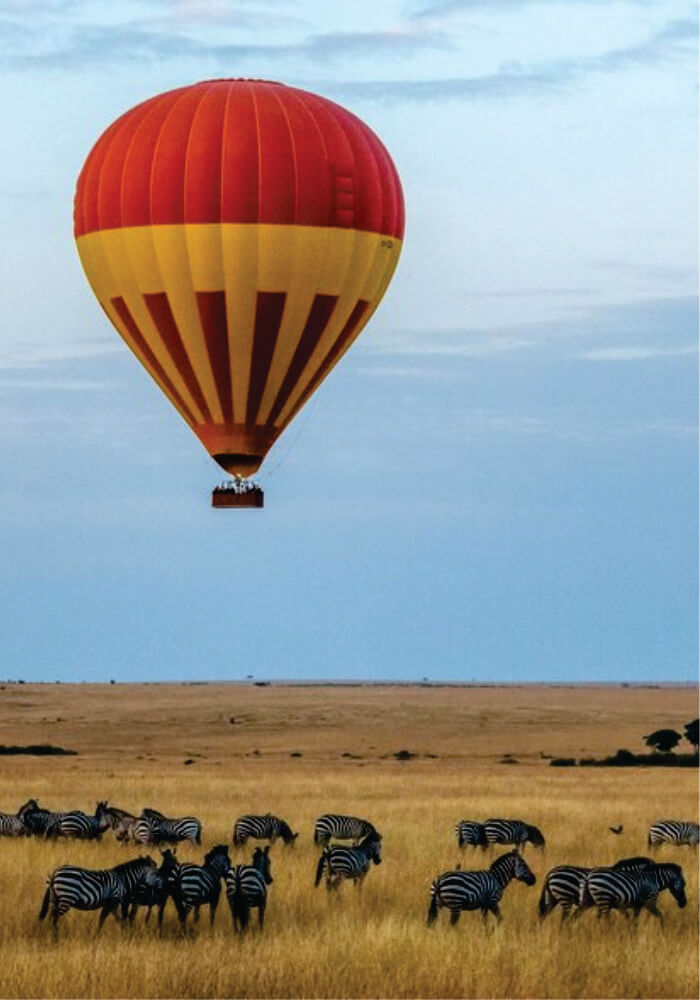
Fly-in earns its keep on a multi-region trip that would be punishing by road. A typical shape is Nairobi (Wilson) to the Masai Mara for two or three nights, a hop to Samburu or Amboseli for two, then an optional flight to the coast for a beach finish. There’s no backtracking, minimal transit, and maximum time in the bush. Each hop adds roughly a few hundred dollars per person, so confirm the current cost as part of your itinerary. For the right trip, it changes what you can fit into a week. (For the camps this unlocks, see our best safari lodges in Kenya.)
Practical tips

Pack a soft bag under 15kg including hand luggage. It’s weighed at the strip. Remember it’s Wilson Airport, not JKIA, so allow time to transfer between the two if you arrive on an international flight. Let your operator handle the flight bookings and timings, because they fit into your itinerary and airstrip transfers and aren’t something to arrange piecemeal yourself. If you’re prone to motion sickness, bring something for it. The views help. And build in a little buffer, because bush flights can shift with weather or other stops along the route.
Frequently asked questions
What is a fly-in safari in Kenya? It’s travelling between parks in light aircraft from Wilson Airport in Nairobi instead of driving. The hops are short, onto bush airstrips near or inside the reserves.
How much does a fly-in safari cost? More than a road safari. Flights add roughly several hundred dollars per person for each hop, on top of the trip cost. There are mid-range fly-in options too, not only luxury ones. Confirm current rates when planning.
Is a fly-in safari worth it? If your trip is short or covers several or remote regions, and you value time and comfort, yes. If you’re budget-conscious or want the journey between parks, driving is often the better call.
What’s the luggage limit on a fly-in safari? Usually a soft-sided bag of around 15kg including hand luggage, weighed at the airstrip. No hard suitcases.
Are the small safari planes safe? Yes. They’re a routine, well-run part of Kenyan safari travel, flown by experienced pilots. The aircraft are simply small, which some nervous flyers notice.
Should I fly or drive my Kenya safari? Fly to save time and reach remote camps. Drive to save money and enjoy the journey. It comes down to your budget, your days and how many regions you want to see.
Deciding on a fly-in safari in Kenya
The best trips usually aren’t all-fly or all-drive. They’re the right mix for your time, your budget and where you want to go. That’s what we balance at Leopard Paw Safaris: flying where it buys you real time, and driving where the journey is part of the joy. If you’d like help planning yours, get in touch. If it’s your first safari, start with our Kenya safari tips for first-timers.
Daisy is a former safari guide and the founder of Leopard Paw Safaris.
Comments